
Creating the Future
Your vision will become clear only when you look into your heart.
Who looks outside, dreams. Who looks inside, awakens. — Carl Jung
The Journey of Identity
In his book Hero With a Thousand Faces, Joseph Campbell talks about the three life paths that we
can take: the village, the wasteland and the journey. The village represents the life that has been
mapped out for us by our society and culture: We are born, go to school, graduate, get a job, get
married, have children, work until we retire, get a gold watch and finally we die. This path has a lot
of security and safety, and doesn’t disrupt the norm or “rock the boat” very much. We do as we are
expected. It is essentially the path of the ego. For many people, this is a satisfactory way to live their
lives.
For others it is not so simple. For some reason, either they do not fit in (because they are the
wrong color, gender, shape, sexual preference, etc.) or they feel called to something more. The
village to them is, in Thoreau’s words, “a life of quiet desperation.” Rather than thrive in the village,
they feel caged, suffocated or repressed. For these people, according to Campbell, there are two other
possible paths.
The wasteland represents the path of the rebel, outlaw or outcast. It is a life on the fringe of
society, one’s family, one’s career, etc.; beyond the edge of what is considered appropriate and
normal. It is an attempt to flourish by rejecting and escaping the village (into sex, drugs, rock n’roll,
etc.). While it is an attempt to find a context in which to thrive, it usually produces the opposite. It
may ultimately end in something like addiction to alcohol or drugs, perhaps some kind of “criminal”
activity, or maybe just a type of life of isolation or dereliction.
The other path is that of the journey . On the journey, we follow our hearts, vision and calling to
find our own way and discover something new. This is the path of all great leaders, entrepreneurs and
pioneers. Through the challenges and discoveries along the path we acquire courage, insight, wisdom,
resiliency and greater awareness of ourselves and the world. When we return to the village we are
able to make our own unique contribution to others and become recognized and acknowledged for
who we really are. The journey is not always an external one. Sometimes we travel internally even as
we stay within the physical context of the village. As a result of our growth, we bring new ideas and
new life to the village, making it possible for more to thrive there. We may even find it possible to
bring healing and transformation to the wasteland.
Being an entrepreneur is about taking this third path; the journey to find how to thrive by
developing the skills to discover and travel your own path and live your own life as the best version
of yourself in service to yourself, others and the world.
In the words of the late Apple Inc. founder and CEO Steve Jobs:
Your time is limited, so don't waste it living someone else's life. Don't be trapped by dogma –
which is living with the results of other people's thinking. Don't let the noise of other's
opinions drown out your own inner voice. And most important, have the courage to follow
your heart and intuition. They somehow already know what you truly want to become.
Everything else is secondary. . .
You've got to find what you love...The only way to be truly satisfied is to do what you believe
is great work. And the only way to do great work is to love what you do. If you haven't found
it yet, keep looking. Don't settle. As with all matters of the heart, you'll know when you find it.
And, like any great relationship, it just gets better and better as the years roll on. So keep
looking until you find it.
Next Generation Entrepreneurs: Creating the Future – Page 1 – Copyright 2024 © by Dilts Strategy Group
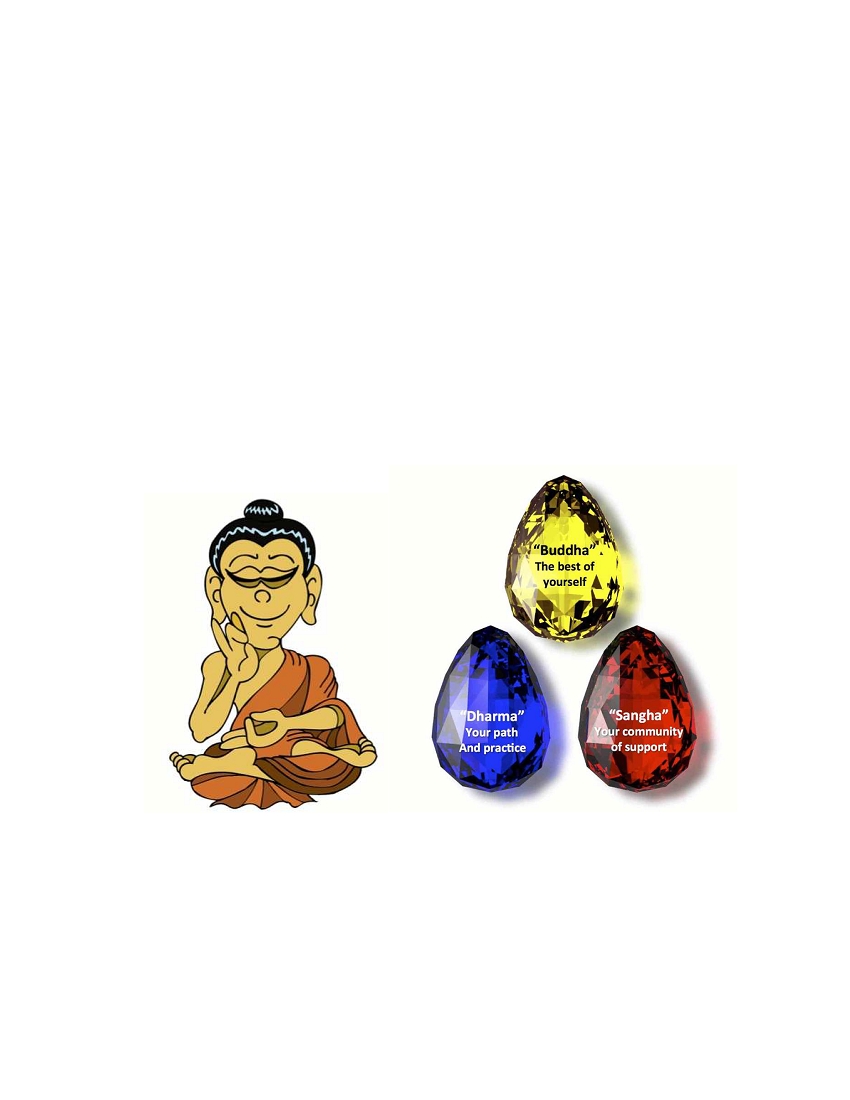
Zentrepreneurship and The “Three Jewels”
Zentrepreneurism is an emerging form of entrepreneurship that combines traditional Western thought
with an Eastern philosophy of seeking answers to the daily challenges of business and life. It
resonates for people who are experiencing a new direction and purpose in their lives and have made a
conscious decision to become a more passionate, purposeful and creative person.
Zentrepreneurism shifts from bottom line thinking to one that emphasizes a “ blended bottom line ”
founded on the belief that organizations can and should produce social good and contribute to the
sustainability of our planet’s ecosystem while producing financial returns that reasonably reward the
risk and commitment of stakeholders.
Interestingly, there is an even deeper connection between the notion of “Zen” and the new generation
of entrepreneurs. The ancient tradition of Buddhism, for instance, is centered on three practices
referred to as the “three jewels”: Dharma, Buddha and Sangha.
authentically living your life path and fulfilling your purpose.
using the same methods and working towards the same goals (i.e., of fulfilling your purpose and
achieving your highest potential).
The “Three Jewels” of Buddhism
Similarly, next generation entrepreneurs want to create both a successful and purposeful business or
career; combining ambition with contribution and mission (“Dharma”), and the desire for personal
growth and fulfillment (“Buddha”). They also desire to attract and collaborate with others who share
the same vision, mission and ambition (“Sangha”). In other words, next generation entrepreneurship
involves creating a world to which people want to belong .
Next Generation Entrepreneurs: Creating the Future – Page 2 – Copyright 2024 © by Dilts Strategy Group

Next Generation Entrepreneurs
An entrepreneur is generally defined as “ a person who organizes and manages an enterprise or
venture and assumes significant accountability for the inherent risks and the outcome .” The name is
most frequently applied to a person who is willing to take on a new venture, project or enterprise,
creating value by offering a product or service, and accepting full responsibility for the outcome. In
essence, entrepreneurship is about taking personal, professional or financial responsibility and risk in
order to pursue opportunity. In this sense, entrepreneurship is not only for individuals or small
companies; it is an essential factor for success in today’s rapidly evolving business world. Principles
of entrepreneurship are necessary for all types of growth, innovation and change.
In recent years, a new generation of entrepreneurs has begun to emerge who are interested in
more than just financial gain; they are also committed to living their dreams and making a better
world through their projects or ventures. Many are people who have made a conscious decision to
become more passionate, purposeful and creative. This translates into increased motivation,
innovation and focus. Next generation entrepreneurs want to create both a successful and purposeful
business, or career; combining ambition with contribution and mission, and the desire for personal
growth and fulfillment. They also desire to attract and collaborate with others who share the same
vision, mission and ambition. In other words, Next Generation Entrepreneurship involves creating a
world to which people want to belong. This new generation of entrepreneurship is driving and
changing the way business is done and paving the way to both our social and economic future.
Key Characteristics of Next Generation Entrepreneurs
Success Factor Modeling Volume I presented the skills needed to become a successful “next
generation entrepreneur.” A next generation entrepreneur is someone who creates a sustainable
business or project to live his or her own dream, while delivering a product or a service that makes a
positive difference in the world and personally growing through it. A next generation entrepreneur, or
“zentrepreneur,” is a person who is committed to:
Living his or her dream; i.e., is passionate about something more than money
Making a positive difference in the world
Establishing a venture that is economically robust and sustainable (if not growing)
Delivering something new, meaningful and innovative
Thus, next generation entrepreneurs want to create both a successful and purposeful business or
career; combining ambition with contribution and mission with the desire for personal growth and
fulfillment. They also desire to attract and collaborate with others who share the same vision, mission
and ambition.
Successful next generation entrepreneurs accomplish this through the following five key
practices:
These practices can be summarized in the following diagram:
Next Generation Entrepreneurs: Creating the Future – Page 3 – Copyright 2024 © by Dilts Strategy Group
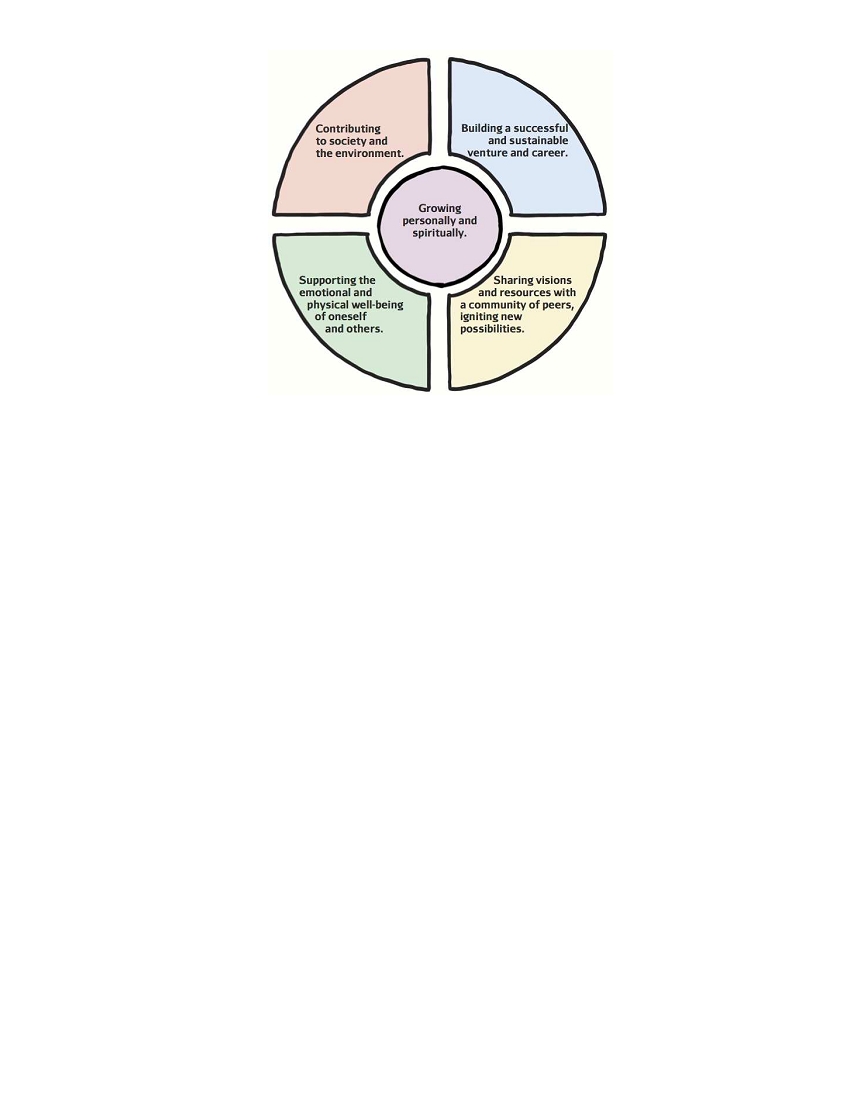
Key Practices Relating to Authentic Success and Creating a World to Which People Want to Belong
The Seven Strategies for Sustainable Success
Success Factor Modeling has identified seven fundamental strategies that entrepreneurs and business
leaders use to achieve authentic and sustainable success:
1. Mastering Optimal Mindset
2. Creating a Clear and Compelling Future
3. Establishing a Critical Path to the Desired State
4. Achieving Internal Alignment
5. Building Powerful Partnerships
6. Effectively Transforming Obstacles
7. Making Dynamic Course Corrections
Next Generation Entrepreneurs: Creating the Future – Page 4 – Copyright 2024 © by Dilts Strategy Group