Success Factor Modeling TM
Success Factor Modeling TM (SFM) is a methodology developed by Robert and John Dilts in
order to identify, understand and apply the critical success factors that drive and support
successful people and organizations. Success Factor Modeling™ is founded upon a set of
principles and distinctions which are uniquely suited to analyze and identify crucial patterns of
business practices and behavioral skills used by successful individuals, teams and companies.
The SFM TM process is used to identify key characteristics and capabilities shared by successful
entrepreneurs, teams and business leaders and then to define specific models, tools and skills that
can be used by others to greatly increase their chances of producing impact and achieving
success.
By examining successful businesses, projects and ventures and observing the behavior of
high performing individuals and teams, SFM™ helps people and organizations to distinguish the
factors that have created a particular pattern of success and to identify the trends necessary to
extend that legacy into the future. These factors can then be “baked into” people’s daily activities
by providing the appropriate strategies, tools and support.
One of the strengths of the SFM TM process is its integration of effective business practices
with key behavioral skills. Modeling behavioral skills involves observing and mapping the
crucial personal and interpersonal processes that produce a successful or remarkable
performance of some type. The goal of the behavior modeling process is to identify the essential
elements of thought and action required by an individual or group to produce the desired
response or outcome—i.e., discovering what is “ the difference that makes a difference.” It is the
process of taking a complex performance or interaction and breaking it into small enough chunks
so that it can be recapitulated in some way. The purpose of behavior modeling is to create a
pragmatic map or “model” of that behavior which can be used to reproduce or simulate some
aspect of that performance by anyone who is motivated to do so.
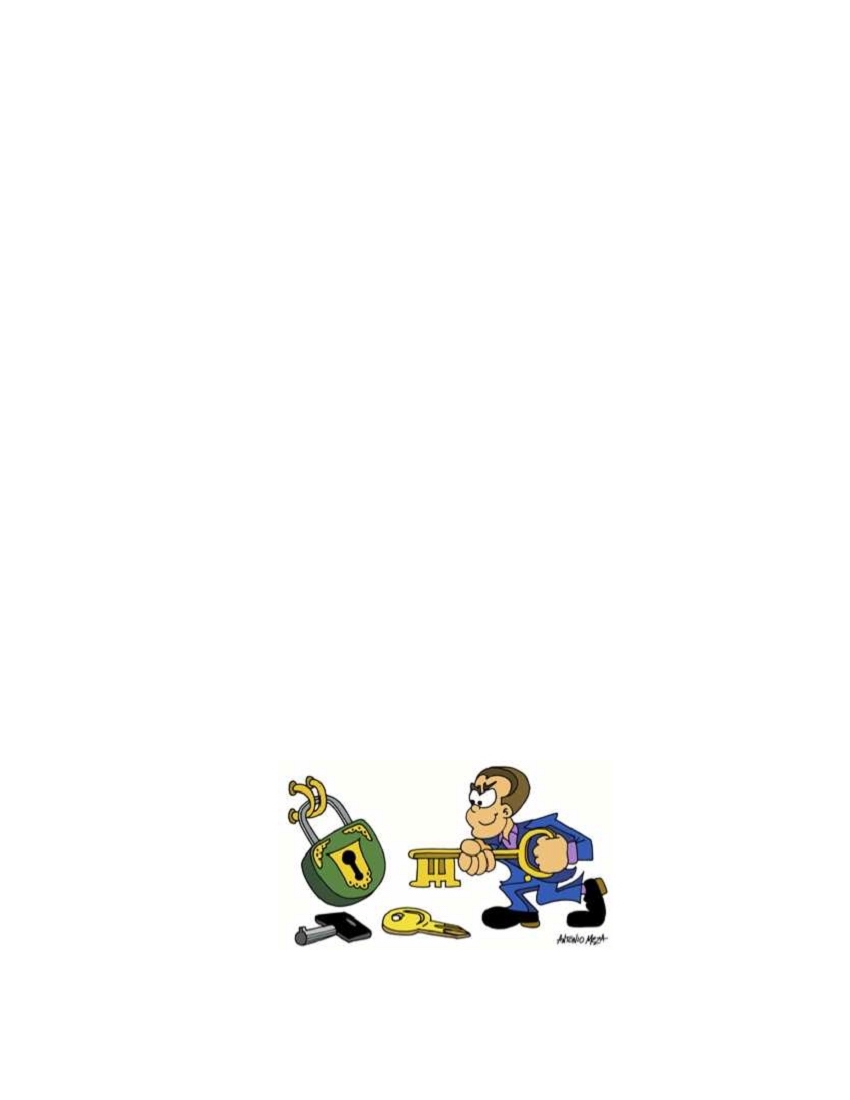
Success Factor Modeling can be likened to identifying the particular key needed to unlock
the door to success for various life situations. Life circumstances present us with doorways
leading to different areas of success. The locks on these doorways are the critical issues and
contextual constraints we must address in order to reach our goal in those particular
circumstances. The “key” to a particular “lock” is the appropriate combination of behaviors and
the corresponding mindset required to effectively address the issues and constraints presented by
a certain context.
A key that successfully unlocks one door will not necessarily unlock another one, even if it
worked perfectly for the previous door. Thus, in order to address changing contexts, an effective
model would provide not only a description of the key, but also include a description of the lock
which that key fits.
An effective model provides a description of the lock (strategic challenges and objectives)
and the key which opens it (skills and actions).
Next Generation Entrepreneurs: Success Factor Modeling – Page 1 – Copyright 2024 © by Dilts Strategy Group
Thus, the objective of the Success Factor Modeling™ process is to make an instrumental
map —one supported by a variety of exercises, formats and tools that allows people to apply the
factors that have been modeled in order to reach key outcomes within their chosen context. To
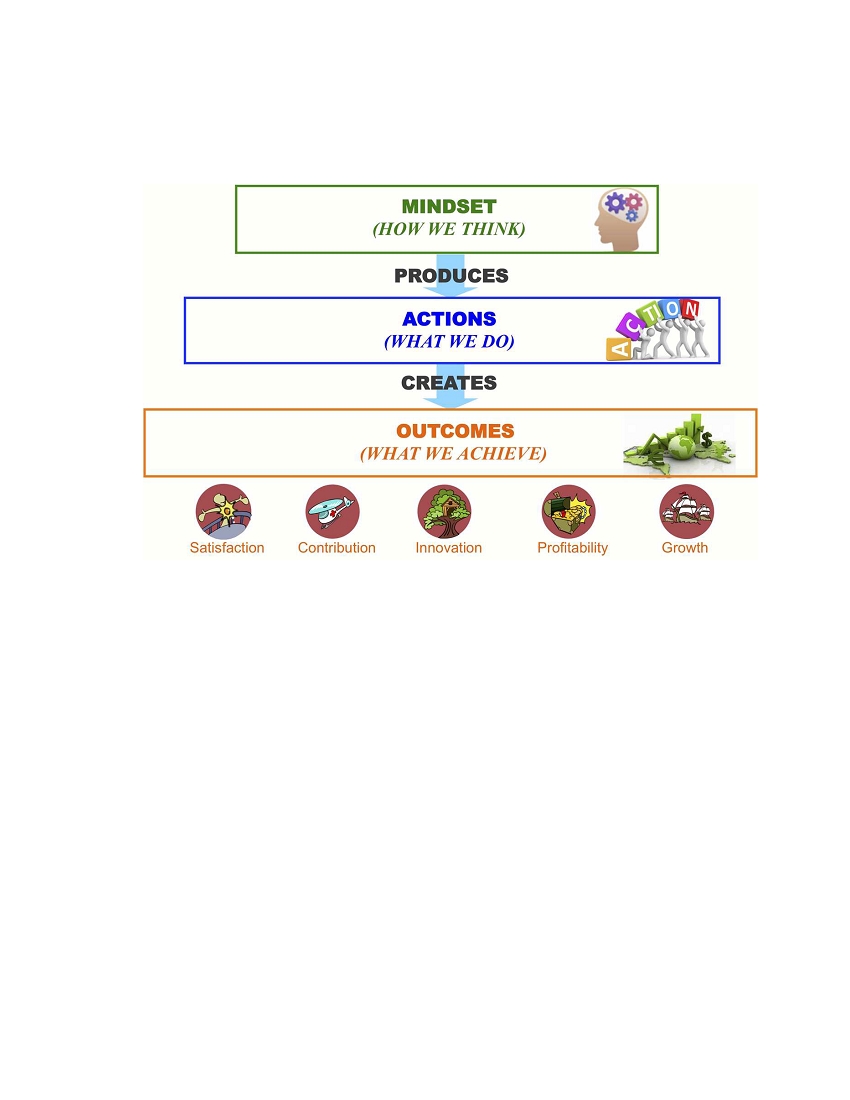
accomplish this, SFM applies the following basic template:
The Basic Success Factor Modeling Template
Our mindset —which is made up of our inner state, attitude and thinking processes—
produces outer behavioral actions . It is our mindset that determines what we do and the type of
actions we take in a particular situation. These actions, in turn, create outcomes in the external
world around us. Achieving desired outcomes in our environment thus requires the proper
mindset in order to produce the necessary and appropriate actions.
Desired outcomes – such as satisfaction, contribution, innovation, profitability, growth, etc. –
are the “locks” an individual is seeking to successfully open. The individual’s mindset and
actions form the “key” which will open a particular lock. The goal of Success Factor Modeling is
to find the proper “keys” which open the “locks” necessary to reach our desired outcomes.
Next Generation Entrepreneurs: Success Factor Modeling – Page 2 – Copyright 2024 © by Dilts Strategy Group

What Is Success?
A key theme in this program is the notion of “success.” Success Factor Modeling is clearly
focused on the concept of achieving success. Thus, it is natural to begin by asking the question,
“What exactly is success and what does it mean to be a success?”
Linguistically, the word “success” comes from the Latin succedere which means to “go up”
or “follow after.” The term is a combination of the Latin roots sub (“under,” “near” or “close to”)
and cedere (“to go”). The implication is that “success” is about going near to something you
want. Merriam-Webster’s dictionary defines success as meaning “to turn out well” or “to attain a
desired object or end.”
Viewed from this perspective, there is no single objective measure of success. It has to do
with your ability to reach your desired outcomes, whatever they may be. You do not have to be a
billionaire in order to feel or be “successful” or “a success.” Essentially, “becoming a success”
has to do with developing the motivation, skills and resources necessary to reach your desired
goals.
Success and “Self”
The notions of “becoming a success” or “being a success” imply goals at an identity level. What
makes someone perceive him/herself as successful or consider him/herself “a success?” Clearly,
money and possessions are not necessarily the main measure of inner success. In fact, successful
people often see money as merely a means to an end rather than the end itself.
As a result of our studies, one of our conclusions is that, at the level of self and identity, you
are successful in any area of your life in which you have the inner experience of feeling both
grateful and generous . Successful people are grateful for what they have and, at the same time,
are able to generously share with others. Bill Gates and Warren Buffett’s Giving Pledge initiative
is great example of this principle.
Thus, gratitude is important because, even if you have enough to give away, if you don’t feel
grateful for what you have, you most likely do not perceive it as valuable. Or, to put it another
way, if you do not value what you have, you won’t feel grateful to have it and thus not feel
successful.
Generosity is important because, if you feel grateful to have something, but believe you must
hold onto every speck of it, then you will constantly worry about needing to have more of it,
similar to an addiction. You will not feel that you have “enough.” Successful people have
enough of what they need and feel that they can give something back.
As a way to get a personal reference experience for this, take a moment and explore some
areas of success in your life by considering the following two statements.
I feel grateful for the ____________________________________________________ I have.
I am able to be generous to others with my __________________________________________
because I have enough of it.
Be sure to consider different items at several levels such as “money,” “time,” “knowledge,”
“energy,” “strength,” “creativity,” “support,” “love,” etc.
Next Generation Entrepreneurs: Success Factor Modeling – Page 3 – Copyright 2024 © by Dilts Strategy Group